Solana Meme Coin Trading with NoLimitNodes API: Ride the Solana Pump Fun with Price Alerts and Token Launch Insights
Solana meme coin trading rewards the people who see the data first. Charts alone won't get you there.
On this page +
Solana meme coin trading rewards the people who see the data first. Charts alone won't get you there. Trading Pump.fun memecoins, deploying your own token, automating a strategy: each of these gets easier and safer with the right infrastructure underneath it, and that's what NoLimitNodes provides.
Why Solana Meme Coins Move So Fast, and Why You Need Better Tools
Solana's quick network and dirt-cheap fees have made it the natural breeding ground for meme coins, with platforms like Pump.fun letting anyone launch tokens in seconds. That openness invites creativity and speculation in equal measure. It also brings volatility, pump-and-dump risk, and missed entries if you aren't tracking the right data.
This is where NoLimitNodes comes in.
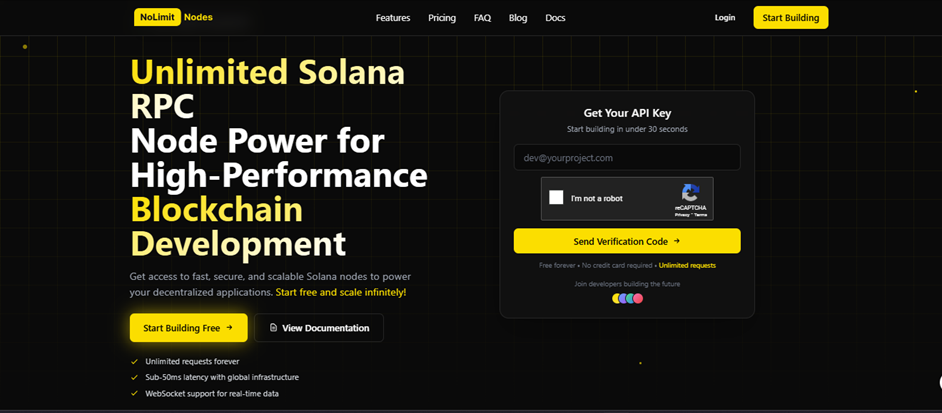
Real-Time + Historical Intelligence with NoLimitNodes APIs
The Create Event API and Trade Event API are the two workhorses for anyone active in the Solana meme coin space.
Track New Token Launches Instantly
Every hour, dozens of new tokens launch on Pump.fun, sometimes hundreds. The Create Event API gives you real-time access to these launches with rich metadata: creator wallet, liquidity status, and creation time.
You can filter launches by date range or specific tokens, which makes it practical to study which wallets keep launching successful tokens, or which sectors (gaming, degen, NFTs) are heating up. Here's a working example against the Nolimitnodes create event API.
import requests

API_KEY = "your_api_key_here"
url = "https://api.nolimitnodes.com/pump-fun/rest/coin-lp-creation?api_key=" + API_KEY

payload = {
    "fromDateTime": "2025-03-03T00:14:55",
    "toDateTime": "2025-03-06T23:59:59",
    "coin": "",
    "page": 1
}

headers = {
    "Authorization": f"Bearer {API_KEY}",
    "Content-Type": "application/json"
}

response = requests.post(url, json=payload, headers=headers)

if response.status_code == 200:
    for event in response.json():
        if event["event_type"] == "create_coin":
            name = event.get("name", "Unknown")
            creator = event.get("creator_wallet", {}).get("address", "Unknown")
            print(f"New Token Created: {name} by {creator}")
        elif event["event_type"] == "create_lp":
            token = event.get("token", "Unknown")
            print(f"Liquidity Pool Created for Token: {token}")
else:
    print(f"Error: {response.status_code} - {response.text}")
Analyze Historical Trading Data
Once a token is live, the Trade Event API lets you study past buy and sell activity. How did a meme coin respond to a whale transaction? What did volume look like in the hours before a coin exploded? The Trade Event API gives you the full picture of how liquidity, wallet count, and trade frequency shaped a token's behavior.
Together, these APIs give you both macro and micro views of token ecosystems, which is exactly what you need to spot pump-and-dump patterns, liquidity traps, and undervalued tokens before the crowd does. Here's the trade event API in code.
import requests

API_KEY = "your_api_key_here"
url = f"https://api.nolimitnodes.com/pump-fun/rest/trade-event-data?api_key={API_KEY}"

payload = {
    "fromDateTime": "2025-03-02T00:14:55",
    "toDateTime": "2025-03-02T23:59:59",
    "page": 1
}

headers = {
    "Authorization": f"Bearer {API_KEY}",
    "Content-Type": "application/json"
}

response = requests.post(url, json=payload, headers=headers)

if response.status_code == 200:
    trades = response.json()
    for trade in trades:
        timestamp = trade.get("timestamp")
        side = trade.get("type")
        amount = trade.get("token_out", {}).get("amount", "N/A")
        price = trade.get("price", {}).get("sol", "N/A")
        print(f"{timestamp}: {side} {amount} at price {price}")
else:
    print(f"Error: {response.status_code} - {response.text}")
With this data in hand, you can identify patterns, catch large whale movements, and make decisions grounded in evidence rather than vibes.
Deploying Tokens on Pump.fun with Scripts
Developers who want to automate token launches can write scripts that talk directly to Pump.fun's smart contract layer. Pump.fun doesn't offer an official deployment API (yet), so most devs use Solana SDKs (@solana/web3.js or anchor) to build deployment scripts that mimic the token creation process.
Tip: Combine your deployment script with the NoLimitNodes Create Event API to confirm your launch went through and is publicly indexed.
Price Alerts, Stop-Loss, and Take-Profit, Automated
The single most requested feature in meme coin trading is monitoring live price movements and executing trades against take-profit and stop-loss thresholds. NoLimitNodes' integration with the Pump.fun WebSocket lets your bot:
- Track real-time price changes
- Monitor liquidity movements
- Observe wallet interactions
- Trigger alerts or trade actions when certain price points are hit
Pair this with a Python trading bot and the whole strategy runs itself: buy when a coin is gaining traction, sell when profits hit your goal, cut losses before the dump.
What Happens to Pump.fun Coins That Don't Reach Raydium?
Pump.fun tokens that fail to reach the Raydium liquidity threshold ($2,000 usually) stay trapped in the Pump.fun ecosystem. They remain tradeable on Pump.fun only, with minimal exposure to larger traders or aggregators.
By watching token liquidity events via the Create Event API, you can judge whether a coin is likely to make it to Raydium or die quietly on launch. It's an effective way to filter out the noise before committing your SOL.
Detecting Rug Pulls and Pump-and-Dump Schemes
Not every token that moons is a gem. Plenty are orchestrated pump-and-dump schemes built to bait FOMO (Fear of Missing Out) traders. By analyzing wallet behavior, creator history, and trade volume anomalies through NoLimitNodes, you can detect:
- Suspicious spikes in volume
- Repeated behavior from known wallets
- Abrupt liquidity withdrawal
Catching these signals early protects your capital and keeps your strategy honest.
Historical Price Data: Better Than Just Real-Time
Real-time price is only half the story. NoLimitNodes lets you go back and study token price movement minute by minute. What happened right before a token pumped 10x? When did volume start drying up before a rug? The Trade Event API answers exactly those questions.
Alerting Tools and Bots for Solana Meme Coins
Beyond building your own with the NoLimitNodes WebSocket and Python, there are Telegram bots and community-built dashboards tracking Pump.fun launches. Most stop at surface data, though. For the deeper layers, wallet behavior, liquidity timing, token deployment patterns, you'll want custom bots running on NoLimitNodes data streams.
Be Notified When a Specific Wallet Launches a Token
One particularly useful Create Event API pattern: set a watcher on a wallet address. When a known degen dev or trusted profile launches a new token, you hear about it instantly, before Twitter or Discord catches on. That's a genuine first-mover advantage.
Example Use Case: Building a Smart Meme Coin Bot
A solid bot looks like this:
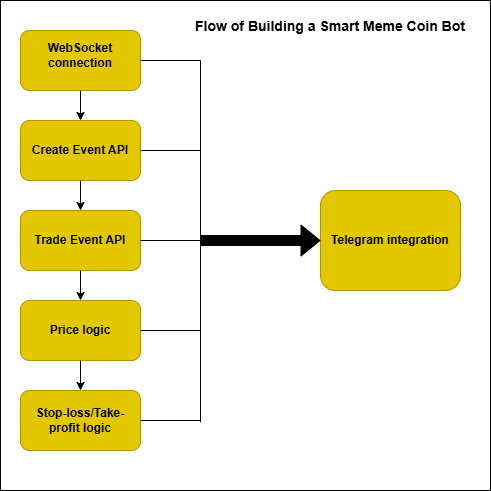
- WebSocket connection to monitor new token launches
- Create Event API to get metadata on each token
- Trade Event API to track liquidity and buy/sell activity
- Price logic to determine entry and exit points
- Stop-loss/Take-profit logic based on thresholds
- Telegram integration for alerting
The result is a real-time, automated, data-driven trading edge.
Why Use NoLimitNodes?
- Low-latency APIs for both real-time and historical data
- Scalable infrastructure to handle high-volume queries
- Developer-first design with clear documentation and examples
- Reliable analytics for smarter trading decisions
Building trading bots, experimenting with meme coins for fun, or putting serious capital to work: in each case, NoLimitNodes gives you the data advantage in the fast-growing Solana meme coin market.
Ready to Launch Smarter?
Start using NoLimitNodes' Trade Event and Create Event APIs today. The edge you need isn't luck. It's data.
Sign up at NoLimitNodes.com and get your free API key to begin.
Every benchmark in this blog runs against our public endpoints.
Spin up an RPC, WebSocket, or gRPC endpoint in under a minute. Flat pricing, no request caps. Reproduce the numbers for your own workload.